New Study Evaluates Inverter Based Methods for Fault Diagnosis in Photovoltaic Systems
Defects in solar modules can reduce the energy yield of photovoltaic systems and increase operating costs over time. Reliable fault diagnosis is therefore essential for system operators. In our latest study, we systematically compared different Daylight Photoluminescence (DPL) methods to identify approaches that detect defects during normal system operation while remaining practical for field deployment with minimal technical effort.
Fault diagnosis in daylight
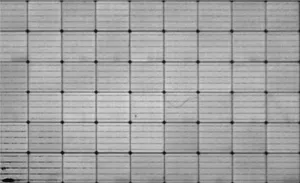
During power generation, solar cells emit weak infrared luminescence. Daylight Photoluminescence (DPL) captures this emission with specialized cameras, allowing defects such as cell cracks or areas with increased series resistance to be identified before they cause significant performance losses. Unlike conventional inspection methods, DPL measurements can be performed under sunlight while the photovoltaic system remains in operation.
A major challenge is separating the weak luminescence signal from reflected sunlight. Instead of relying on expensive optical filters, we evaluated different inverter operating modes to isolate the desired signal.
Comparing five measurement approaches
The study investigated five DPL measurement methods:
- Inverter IV sweep
- Inverter power control
- Inverter shutdown
- Dynamic shading of individual modules
- Short Current Interruption (SCI)
In addition, three image processing methods were compared:
- Dark Image Subtraction (DIS)
- Pearson Correlation Coefficient (PCC)
- Non Normalized Pearson Correlation Coefficient (NNPCC)
The NNPCC algorithm was newly developed as part of this work.
New image processing method improves defect visibility
The results demonstrate that NNPCC provides substantially better visualization of defect structures than conventional PCC analysis.
Cell cracks and regions with increased series resistance were detected most reliably using IV sweep and inverter shutdown. These methods achieved the highest agreement with laboratory reference images.
Image quality was evaluated quantitatively using the Structural Similarity Index (SSIM). The highest SSIM values, approximately 0.65 to 0.66, were obtained with IV sweep and inverter shutdown combined with either DIS or NNPCC.
Dynamic shading as a practical alternative
Dynamic shading also proved to be a promising approach. In this method, neighboring modules are briefly shaded while the inverter continues operating under Maximum Power Point Tracking (MPPT).
Its main advantage is that no inverter reconfiguration is required, making it suitable for inspecting individual modules under field conditions.
Benefits for PV operation and maintenance
The study shows that modern DPL techniques enable reliable defect detection during normal system operation.
This allows operators to:
- Reduce maintenance costs
- Detect energy losses at an early stage
- Assess system condition more efficiently
- Minimize downtime
The approach is particularly attractive for large scale photovoltaic systems, where rapid condition monitoring and quality assurance are essential.
Outlook
The findings suggest combining inverter shutdown for fast system wide inspections with dynamic shading for detailed analysis of individual modules. This combination enables DPL measurements without rewiring and without major modifications to the inverter configuration.
PV diagnostics without system downtime
Detecting Defects During Power Generation
• Inspection during normal system operation
• No need to remove individual modules
• No additional wiring required
• Minimal energy yield losses during measurements
• Potential for faster maintenance of large scale PV systems
Key findings
• Comparison of five DPL measurement methods during normal PV system operation
• New NNPCC algorithm improves defect visibility
• Reliable detection of cell cracks and series resistance defects
• Highest image quality achieved with IV sweep and inverter shutdown
• Quantitative evaluation using SSIM and SNR
Why does it matter?
• Defect detection without removing solar modules
• Diagnostics under daylight and during normal operation
• Earlier identification of performance losses
• Reduced maintenance effort
• Supports cost effective operation of large scale PV systems